In this day and age, I feel the need to mention that I don’t use AI to write my posts!
I’ve hiked these trails, taken these photos, and collected this information personally (sometimes with the help of my friends, who are also real, live people). I appreciate you being here and utilizing my work for your future endeavors.
Also: Some of the links below are affiliate links, meaning that, at no additional cost to you, I may receive a commission if you click through and make a purchase.
Thank you for your support!
The Effect of POTS on Hiking
Autonomic disorders and chronic diseases are never fun to deal with, especially when they interfere with your daily life and chosen activities.

In episode 13 of Her Side of the Trail, I speak with Christine Reed about her experience with POTS, from diagnosis to how she manages the disorder, and how it has affected her mentally.
Christine talks about living with POTS and the challenges she faced before she was even diagnosed, not knowing why she was feeling the way she was. She also shares some of the things she does to overcome the symptoms and allow her to continue enjoying the trail.
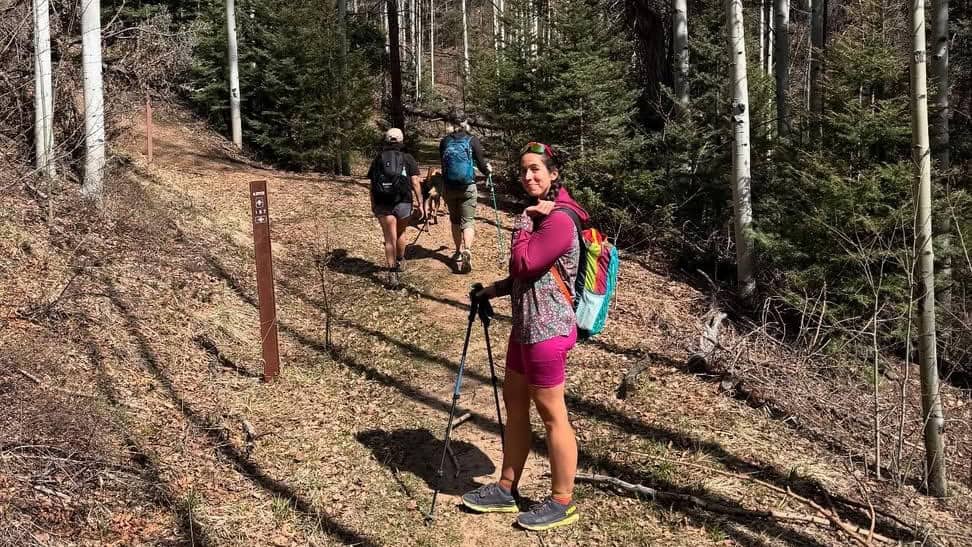
Christine is not letting POTS stop her! You can follow along with her adventures on her Instagram and website. Don’t forget to check out her two books, Alone in Wonderland and Blood, Sweat, and Tears.
Listen to the episode above or watch it on YouTube
What We Talk About This Episode
[00:02:57] Van Life: Christine shares about her nomadic lifestyle and living in a van.
[00:06:23] Talking About POTS: Christine talks about when she was diagnosed with POTS and what her symptoms were prior to diagnosis
[00:10:30] Lifestyle Changes: Christine speaks about what she does every day to alleviate her POTS symptoms
[00:15:22] Multi-Day Hike Preparation: Christine shares how she plans out water and food intake during her long-distance hikes to avoid POTS flare-ups
[00:19:12] Coming to Terms: Christine talks about how she felt emotionally and mentally after receiving her diagnosis
[00:25:07] Finding Community: Christine discusses how online communities have helped her feel not so alone in her diagnosis
[00:26:04] Writing Books: Christine gives a brief synopsis of her two books, Alone in Wonderland and Blood, Sweat, and Tears
Lauren – Her Side Of The Trail (00:00)
Hello, Her Side of the Trail listeners. Thank you so much for being here and listening to this podcast. Your support means the world to me. If you would like to support this podcast even more, could you please take the time to leave a rating or a review on any of the ways you are watching or listening to this podcast?
Reviews and ratings are so helpful to help push this content out in front of new audience.
Thank you so much and I hope you enjoy this episode.
Christine Reed (00:28)
And so when I got diagnosed, I was like, oh my God, it’s not my fault. And that was like a huge weight off of me in some sense. But at that exact same moment,
Lauren – Wild Kids Wander (00:32)
Yeah.
Christine Reed (00:39)
I was like, I’m never gonna have the body that I’ve been trying so hard to have. I’m never going to get better. Like I’m never going to be quote unquote in shape.
Lauren – Wild Kids Wander (00:46)
Yeah.
Christine Reed (00:50)
There was this version of myself that I envisioned someday getting to be because I had put in enough work. And that day I realized that was never gonna happen. And that was hard.
Lauren – Her Side Of The Trail (01:10)
On today’s episode, I’m speaking with Christine Reed. I wanted to bring Christine on here to talk about health and hiking. Christine has POTS, which is an autonomic disorder, and I have Graves’ disease, which is an autoimmune disorder. Both of them have symptoms or side effects that affect how our bodies are during activities or even sometimes doing nothing.
I wanted her on here just to kind of bring to light that your health, the things that you’re dealing with, obviously affect your hiking. And if that happens with you, you’re not alone. And I just wanted Christine on here because I love her attitude. this woman is driven. Like she’s not ⁓ letting POTS slow her down. And I love that. And I just wanted her on here to kind of inspire you.
to also make you feel like, okay, you’re not alone. Like even though social media seems like everyone is perfectly healthy, doing amazing hikes, doing amazing things. Like, you know, there’s some people out there that, you know, they’re working through some things, right? And we’re overcoming things. if you’re one of those people, you’re not alone. I needed to hear that she also had similar…
issues and difficulties and things like that. Like I needed that for myself. if you have something going on health related, whether it’s a long-term health issue or just a temporary one, you’re not alone. Okay. So let’s get into this episode. Christine is awesome. And I think you’ll love listening to this episode as much as I enjoyed speaking with her.
Lauren – Wild Kids Wander (02:45)
Hi, Christine. Thank you so much for joining me today. I’m so glad to have you here. How you doing today?
Christine Reed (02:51)
my gosh, so good. After all the technical difficulties, I’m so pleased to be here.
Lauren – Wild Kids Wander (02:57)
Gotta love computers and tech, right? It’s supposed to make life easier for you, but not always. So I just kind of want to have the audience get to know you a little bit. And I was doing a little research on you, obviously, before our interview. And I noticed that you were nomadic for a while, correct?
Christine Reed (03:12)
I was, yeah, I lived in three different vans over the course of almost seven years.
Lauren – Wild Kids Wander (03:17)
how many, places did you park your van over those seven years? Like how many states did you cover? Do you know? ⁓ I’m just curious.
Christine Reed (03:23)
Oh my gosh, I have not counted. Probably like
20 to 25. I would say probably at least half.
Lauren – Wild Kids Wander (03:30)
That’s awesome. That’s awesome. Did you stay mainly like on the western side of the country
Christine Reed (03:35)
Every year I would do an East Coast trip so that I could be at Appalachian Trail days in Virginia. ⁓ So sometimes I would just like dart over to the East Coast and do like Virginia, North Carolina and then head back. ⁓ But I did a couple summers where it was like full East Coast like up to Maine. But yeah, other than that, I would be very much West Coast kind of Colorado centric.
Lauren – Wild Kids Wander (03:39)
There you go.
That’s nice.
That really sounds a lot of fun though. I don’t know if it’s for me, but I still like, that’s kind of like something that I’m like, I would love to do that. But then I think like maybe I’d be in it and I’d like, what am I doing?
Christine Reed (04:05)
I think van life is definitely one of those things that everybody romanticizes and a lot of people actually shouldn’t. Yes, a van trip, yes.
Lauren – Wild Kids Wander (04:07)
You
No, I shouldn’t, shouldn’t. Maybe for like a week I could do van life. A van
trip, So now where are you based then? Since you’re no longer nomadic, you are a full-time resident somewhere. Where is that?
Christine Reed (04:27)
⁓ I recently moved to Taos, New Mexico. It’s a very cute little like half ski town, half rural farmland.
Lauren – Wild Kids Wander (04:30)
Okay, all right.
so that’s nice, so have the mountains very close to you then, right?
Christine Reed (04:39)
Yes, yeah, I’m basically right at the base of the Wheeler range.
Lauren – Wild Kids Wander (04:43)
So are you liking being, you know, settled or do you miss the van life?
Christine Reed (04:48)
It’s definitely an adjustment. I spent most of the last year feeling pretty over being full-time nomadic and ready to find a place and settle somewhere. And of course, you can want that and then you get there and you’re like, I kind of miss certain things about being on the road. Right, can’t we just have it all?
Lauren – Wild Kids Wander (05:07)
Yeah, the grass is always greener, right?
Christine Reed (05:12)
Um, so, you know, I, there are things that I love and I’m building a little community and there are things, it’s really nice to have the consistency of like, every week I go to yoga class and my best friend is the teacher cause she’s the first person I met when I came to town. Um, you know, things like that, which are just like lovely routines and I’ve like joined a running group and there’s, you know, there’s things in town that are super nice to have access to. Um, yeah.
Lauren – Wild Kids Wander (05:35)
Yeah, normalcy is nice. It’s
comforting in a way, right?
Christine Reed (05:39)
is, I think we are creatures of habit, they say.
Lauren – Wild Kids Wander (05:41)
I am for sure, But I didn’t have you on here to talk about your nomadic lifestyle. I actually brought you on here because you and I have something in common. We both have a chronic illness that kind of affects the way we live life and have to approach our activities. And I wanted you on here because I do feel like social media a lot is everyone is happy and healthy and
I wanted to show that if other people are suffering from some kind of chronic illness that is affecting their hobbies, I wanted them to know that they’re not alone. Other people like us are out there. So can you share what your illness is?
Christine Reed (06:23)
Yeah, so I have POTS, which stands for Postural Orthostatic Tachycardia Syndrome, which is a form of dysautonomia, which is an umbrella term that kind of encompasses a very wide range of things. And POTS is not super well understood and also generally co-diagnosed with other things.
⁓ And after I got my POTS diagnosis, I didn’t really pursue other diagnoses because it sort of answered the questions that I was mostly worried about. And so I don’t know if there’s not some other underlying condition, very possibly. But I think the POTS description, diagnosis, treatment, all of the things around that have…
Lauren – Wild Kids Wander (06:45)
Okay.
There might be something else going on too. I mean, yeah.
Christine Reed (07:11)
sort of answered the questions I had and helped me better manage my symptoms. So getting ⁓ a further diagnosis would be more work than it’s worth to be at this moment.
Lauren – Wild Kids Wander (07:20)
how long ago were you diagnosed then?
Christine Reed (07:22)
I got diagnosed in August of 2020. I have had these symptoms my whole life. So it wasn’t it wasn’t like a sudden onset thing, which is also common with POTS.
Lauren – Wild Kids Wander (07:25)
Okay, so it’s been a while. Yes.
what were the symptoms then that you have that you’ve had your entire life that you noticed?
Christine Reed (07:38)
So the main symptoms of POTS are generally around heart rate and respiratory rate at rest and in your everyday life, but also during activity. And so I’ve always had kind of an erratic heart rate when I exercise. My heart rate shoots up to like 160, 170 at kind of a casual walking pace. Especially before I’ve gotten it down a little bit in the last few years with treatment and
just like more exercise. ⁓ But that was sort of the main symptoms I had when I was a kid, which was just like, I could not run. ⁓ I thought I had asthma as a child, because that was the only explanation I’d ever heard of why a child wouldn’t be able to run. And it is hard to breathe because your heartbeat is going so fast. And then you’re trying to breathe to oxygenate that blood to keep things moving. And so I did breathe very hard, but I didn’t breathe like someone who has asthma.
Lauren – Wild Kids Wander (08:23)
Yeah, because your heart’s beating. Yes.
Christine Reed (08:32)
So those are kind of the main things. But then the thing with this autonomia is its dysfunction of the autonomic nervous system, which is everything that you don’t consciously control. So it also affects blood pressure. It affects temperature regulation. I sweat a ton. Like there’s all these other little symptoms that are kind of like lower level than my heart rate is 180. But once you start
Lauren – Wild Kids Wander (08:47)
Mm.
Christine Reed (08:58)
to understand what dysautonomia is, then you start to notice all of these other things and be like, my gosh, is that why I can’t stand up in the shower?
Lauren – Wild Kids Wander (09:07)
You gotta love the body.
Christine Reed (09:09)
Bodies are weird, man. Yeah.
Lauren – Wild Kids Wander (09:12)
I can commiserate with a high heart rate because I actually have Graves’ disease. So that’s like hyperthyroidism. Now I don’t have these symptoms anymore because I actually had my thyroid removed over a year ago. But prior to that, I would be laying in my bed doing nothing and my heart rate would spike to 120. So I totally understand that because I’d be doing an activity and it would just or I’d just be walking down the hall at work.
Christine Reed (09:19)
Mm.
Lauren – Wild Kids Wander (09:37)
and I’d be breathing heavy and it would feel very difficult because my heart rate would just spike out of nowhere. So I can totally appreciate the difficulty and the annoyance behind that.
Christine Reed (09:48)
I feel like once you have a diagnosis, annoyance is a great word, right? Before that, it’s like, what is wrong with me? It can be really scary. Once you know what’s going on, it’s much more just like, this is inconvenient, right?
Lauren – Wild Kids Wander (09:52)
Yes. What is wrong with me? Yes. Yes.
Yeah,
so inconvenient, very inconvenient, especially when you’re trying to do activities or just live life, you know, just take a shower. I’m just trying to shower. Why can’t I do that? so you did notice that some of your symptoms were exacerbated then during activities like that’s why you couldn’t you couldn’t run. It was difficult for that. ⁓ So now that you know your diagnosis, what have you done to try to counteract?
Christine Reed (10:09)
Yeah. Yeah.
Lauren – Wild Kids Wander (10:30)
these symptoms or avoid these episodes? there anything that you’ve changed in your diet, your medications, things like that?
Christine Reed (10:39)
Yeah, so I’m not on any medication. There are some medications that can be prescribed off label for POTS. There’s not really anything that’s like specifically for POTS.
Lauren – Wild Kids Wander (10:43)
That’s what you said.
Yeah, no,
Is pot something where like you want to increase your sodium intake. Is that is that correct?
Christine Reed (10:56)
Yeah, so that’s one of the things I do is like I am managing hydration and electrolytes is huge. ⁓ And that’s one of the things that like, if I’m not doing it correctly, I most quickly I’m like, okay, like I go lay down for half a day. ⁓ So that is one that’s really important, especially if you’re exercising a lot, especially if you’re someone like me who sweats a ton. So you’re like losing electrolytes constantly, losing water constantly.
Lauren – Wild Kids Wander (11:02)
Okay. Yes.
Yeah.
Christine Reed (11:23)
And also, I don’t know how much people know about like just respiration in general, but like we lose moisture when we breathe. So if you are exercising and breathing hard and especially breathing through your mouth, ⁓ then you’re also like losing a ton of your hydration. So it’s not just sweating.
Lauren – Wild Kids Wander (11:30)
Mm-hmm.
I actually
knew that, but I totally forgot about that and that makes a lot of sense. It really does. Drink double.
Christine Reed (11:46)
So yeah, if you’re gasping for air as I often do, you gotta drink double.
So I do also have some nutrition things like I had cut out gluten and some other inflammatory foods and that seems to do better for me. those are kind of the main like kind of intake things. They do also recommend wearing compression garments.
Lauren – Wild Kids Wander (12:09)
That makes sense,
Christine Reed (12:09)
⁓ to help with blood pressure and restricting
your vessels. For a long time, I was like, that doesn’t help me, I’m not doing that. And more recently, especially when I’m hiking, backpacking multi-day stuff, ⁓ I have a pair of light compression socks that are knee high that I wear when I sleep. ⁓ And I do think it helps as much as I wanna pretend that it doesn’t, because I hate wearing them. I really dislike them a lot, ⁓ but I do think that it helps.
Lauren – Wild Kids Wander (12:33)
They are so uncomfortable.
Christine Reed (12:39)
⁓ I’m so…
Lauren – Wild Kids Wander (12:39)
They probably do help though, yeah. But yeah, I agree. They’re awful to wear. So that was my next question then. So what are some of the adjustments that you’ve made then so you can still enjoy hiking and do these multi-day hikes
Christine Reed (12:42)
Yeah
Yeah, I mean, they gave me like a little pamphlet when I got my diagnosis that was just like, here’s the things you should do. And one of them was like, eat 6,000 milligrams of salt, ⁓ which I out of curiosity went home and like measured a little bowl of salt with 6000 milligrams in it just to see like, what does that look like? And it’s like a disturbing amount of salt, it’s like a quarter cup. ⁓
Lauren – Wild Kids Wander (13:10)
I was gonna say, like, that’s more than you get
in, like, a can of soup.
Christine Reed (13:14)
It’s a lot. ⁓ And I will say like everybody’s body is super different. And I think that is probably one of the most important things to remember when you are dealing with chronic illness is like, you are not anyone else. And as much as your doctor can give you a sheet of things that’s like, here’s some stuff you can do to help.
to figure it out for yourself. And I have found that trying to eat an arbitrary amount of salt every day is ridiculous, but that I can tell.
based on monitoring when I need more salt, just from several years now of practice of like, ooh, I’m starting to feel weird. If I eat more salt, does that help or make it worse? Or if I drink more water, does that help or make it worse? So I can start to tell sort of what it feels like in my body
Lauren – Wild Kids Wander (13:57)
you know your body better than anybody else.
Christine Reed (13:59)
Yeah, and I think one of the other things that has been really critical for me, and this may sound counterintuitive to people who are really struggling with symptoms and any kind of activity is a challenge, the more active I am, the better I feel. And if I can consistently exercise every day, even if that just means like going for a walk and doing some yoga,
walking and going to yoga classes is kind of my minimum amount of exercise in a day where I’m not gonna feel like progressively worse day to day.
Lauren – Wild Kids Wander (14:29)
I’ve noticed that too, that the less active, the worse you end up feeling. consistency is key. I agree with you on that But not pushing yourself too much, correct? You don’t push yourself too much?
Christine Reed (14:45)
Uh
Occasionally we overdo it. And what I have learned from that is that when one has overdone it, you still have to exercise the next day. So I think when I have gotten myself in trouble is when I have done something very extreme and then been like, I’m gonna rest for three or four days. And then it’s like, now I’m crashing. So even, yeah, even if I do something that I’m like, oh my gosh, I’m so sore, like my body hurts, I’m like.
Lauren – Wild Kids Wander (14:55)
Okay, that’s good to know.
Okay.
Christine Reed (15:13)
depleted, then it’s like the next day I have to be like, okay, we’re really on top of hydration. We’re really on top of getting a lot of calories in and then still moving around throughout the day.
Lauren – Wild Kids Wander (15:22)
for your multi-day hikes, how do you plan for appropriate water intake, all of that, Do you have ⁓ an idea how many of your bottles that you need to drink
how do you plan for that?
Christine Reed (15:36)
So for people who are into long distance backpacking, there is an app called Far Out that is very popular in that community. And it has marked on it like all the water sources and people can go in and comment and say like this water source was flowing great or like this one is dried out if you’re in an area that’s like prone to drought. So most of my hikes, I have pretty good information about where water will be available.
Lauren – Wild Kids Wander (15:48)
that’s… okay.
That’s really helpful, that’s great.
Christine Reed (16:04)
that does help a lot. Cause then it’s like, if there’s water all over the place, like there is on the Appalachian Trail on the East coast, it’s like there’s water every three miles. Like you really don’t have to carry a ton and you don’t have to stress about it. out West, really depends on where you are. New Mexico desert, ⁓ there do tend to be longer stretches with no water. So that is something that I’ve been like figuring out as I’ve been hiking out here. ⁓
Lauren – Wild Kids Wander (16:10)
Yeah.
Mm-hmm.
and not the best water sources.
Christine Reed (16:32)
But I do find that I do okay if I, they call it cameling up in the backpacking world, which is just like drinking a ton of water before you start or drinking a ton of water when you get to a water source. And that way, if there’s not a water source for a long time, you’re like, okay, I’m all hydrated. And that’s another thing that like, you just have to kind of test and learn like how far can my body go on a liter of water or a liter and half of water if at the beginning and the end I can have as much as I want.
Lauren – Wild Kids Wander (16:37)
Okay.
Christine Reed (17:02)
or kind of depending on what the conditions are. And then food, same thing, right? Like you learn how often you need to eat, how much you need to eat. I will say one of the biggest game changers for me in hiking and in running was learning how to eat while I was moving and learning to eat at regular intervals. Because certainly on the Appalachian Trail in 2015, which was like my first big hike, I was not diagnosed at that time. I also was not an experienced hiker.
Lauren – Wild Kids Wander (17:15)
Mm-hmm.
Christine Reed (17:27)
So I just had no idea what I was doing on all fronts. ⁓ And I would wake up in the morning, eat oatmeal, hike for three or four hours without putting anything into my body, ⁓ stop and eat lunch, and then hike another three or four hours without putting anything into my body. And then I would eat 3000 calories before I went to bed. And let me tell you, my body felt horrible.
Lauren – Wild Kids Wander (17:35)
wow.
Christine Reed (17:49)
And this guy that I met on the AT who was a marathon runner was like, you got to eat like throughout the day. And I was like, I don’t even know what that means. Like, I don’t know what you’re talking about. And it was not until many years later when I started getting into longer distance running that I started eating like gels and gummies and things like that,
Lauren – Wild Kids Wander (18:06)
I was going to say the
A lot of my hiking friends just they just eat candy on the trail.
Christine Reed (18:10)
Yeah, trail and running, that’s both popular. even things like a Lara bar, I can kind of eat and walk at the same time, you know.
Lauren – Wild Kids Wander (18:13)
Yeah,
Mm-hmm. Yeah, I can’t eat like
anything like too, too heavy when we’re in, you know, yeah, no, but, you know, yeah, like a bar. Yeah. Try not to choke on your, on your Lara bar
Christine Reed (18:22)
if it’s too dense. Why don’t you also have to think about like, you’re breathing hard, you’re trying to chew and swallow and you’re walking uphill like.
I feel like the
skill of eating while moving is like even more difficult if you’re someone who’s like breathing like you’re gonna die. Like the number of times I’ve almost choked on something, ⁓ it’s not zero.
Lauren – Wild Kids Wander (18:49)
my kids have actually, I think, perfected eating on the trail. They’re just like, whatever. They’re like, we’re hungry. I’m like, I don’t want to stop. That’s fine. We’ll just walk and eat. has your diagnosis then ⁓ affected you at all emotionally, mentally, anything?
Christine Reed (18:53)
Nice. Perfect.
that’ll serve them later in life.
Lauren – Wild Kids Wander (19:12)
I know sometimes I just feel just so down, so frustrated with, especially if you’re just having a bad day and you’re just like, why me? Why am I stuck with this stupid body? Do you ever get like that
Christine Reed (19:29)
I will say when I got my diagnosis, I left the doctor’s office, I sat in my car and I cried. ⁓ It was kind of a two-fold emotional experience because on one hand, I was like, all of these things that I’ve experienced my entire life suddenly make sense. And there’s a really, really intense sense of relief when you get an answer like that, that’s like, ⁓
Lauren – Wild Kids Wander (19:44)
Now you have an answer.
Christine Reed (19:54)
I have for so long felt like something was wrong with me on like a personal level, like that I was not good enough, that I wasn’t trying hard enough, that I just wasn’t like working hard enough to be quote in shape. And by that time, I’ve been running for five years when I got diagnosed. And I was like, I’ve become a long distance backpacker. I hike all the time. I’ve started running. I’d run a half marathon. I was training for an ultra.
Lauren – Wild Kids Wander (20:09)
Mm-hmm.
Christine Reed (20:21)
I still felt like I hadn’t done enough because I looked around at other people and I saw they don’t seem to be struggling as much as I am. So they must have done more or done better or done something to deserve that, that I haven’t figured out yet.
And so when I got diagnosed, I was like, oh my God, it’s not my fault. And that was like a huge weight off of me in some sense. But at that exact same moment,
Lauren – Wild Kids Wander (20:42)
Yeah.
Christine Reed (20:50)
I was like, I’m never gonna have the body that I’ve been trying so hard to have. I’m never going to get better. Like I’m never going to be quote unquote in shape. Right? Like this, what I, where I was at that time when I was training for a 50K was the best shape I’m ever going to be in. And still when people looked at me running, they thought like, what does that girl doing?
Lauren – Wild Kids Wander (20:58)
Yeah.
No.
Christine Reed (21:19)
Right, you know what I mean? But it was like the appearance and what I was experiencing was like, it was, I did feel better than I had ever felt before, but I was still heart rate at 160, breathing like I’d never run before. So like the best I’m ever gonna feel is like most people’s off the couch. And when you realize that, like I can work as hard as a professional athlete and perform as well as someone who doesn’t train.
Lauren – Wild Kids Wander (21:23)
I get that though.
You’re grieving that, that… What, maybe… Yeah. Yeah.
Christine Reed (21:45)
I saw
the possible person that I thought I could be.
There was this version of myself that I envisioned someday getting to be because I had put in enough work. And that day I realized that was never gonna happen. And that was
Lauren – Wild Kids Wander (22:05)
hard.
Christine Reed (22:06)
hard. Yeah.
Lauren – Wild Kids Wander (22:08)
It’s really hard.
Christine Reed (22:09)
and it’s been almost five years since then. And I think in some sense, I’ve reconciled that and I recognize the work that I’m putting in and I place, I now place myself.
Lauren – Wild Kids Wander (22:23)
Hey, you’ve done so much!
Christine Reed (22:28)
not as a professional athlete, obviously, because I’m not competing against the pros. But like, I have friends who are professional athletes. And I look at, like, the effort that I put in and the work that I put in. And I’m like, you know, there’s there’s a level of equivalence there. There’s a level of like, I’m working really hard to be this best version of myself. And unfortunately, there’s a ceiling on that. ⁓ But I’m really proud to like
Lauren – Wild Kids Wander (22:31)
Yeah.
Christine Reed (22:56)
be out there every day continuing to put the work in and like trying to be the best version of myself. And I have achieved things that I didn’t think that I could in 2020 when I got that diagnosis
I mean, I’ve gone longer distances than I had planned to do. it’s just the day in and the day out, right? But I also have learned to manage my body so much better because I have this information that it’s almost like I’m not necessarily doing more objectively, but I feel better while I’m doing it. Because then I was training for my first 50K and there were days I would go out for my long run, I would run 18 miles.
Lauren – Wild Kids Wander (23:13)
Yeah.
Christine Reed (23:30)
And then I was absolutely useless the rest of the day. And most of the day after I was just, because I hadn’t fueled properly, hadn’t hydrated properly and my body was crashing out. And now I can get through an 18 mile day and like, you I still have to rest afterwards, but I then can get up the next day and like go again.
Lauren – Wild Kids Wander (23:49)
That’s incredible. To me, that’s awesome. And I understand because I’ve been there too where, especially post my thyroidectomy, I pushed myself too much and then I would do a three mile hike, something, that’s easy, and I’d be dead the next day. I couldn’t get off the couch. And now I can do twice, three times that and I’m fine the next day.
Christine Reed (24:13)
Yeah.
I would say that my experience now, five years later, is less grief over that version of myself that I’ll never get to be and more anxiety about getting sick or going into a flare.
Lauren – Wild Kids Wander (24:25)
like an episode.
Christine Reed (24:27)
I did have that happen in 2022, I’m sorry, 23, where a convergence of things that I’m still not sure I can quite explain had me…
mostly bedridden for about two months.
And that was a really difficult time emotionally for me. And so now anytime that I start to feel a little off, I kind of go into a mental spiral of like, my god, what if I’m like getting really sick again?
Lauren – Wild Kids Wander (24:52)
I don’t wanna go back there again.
Christine Reed (24:54)
It’s one thing to deal with baseline chronic illness all the time where it’s like, I always feel medium crappy, but I know how to deal with that versus like now things are, you know, going off the rails and then it’s, it just takes so long to recover.
Lauren – Wild Kids Wander (24:59)
Yeah.
really bad. Yeah.
it’s just so hard to explain to people who aren’t going through it how it feels. It’s just, there’s like no vocabulary for it. No one understands, you know. People try to, you know, they’re sympathetic, but it’s just, no one really knows how you feel. So you kind of feel alone in that respect too,
Christine Reed (25:27)
there’s so much online community for people with chronic illness. And I do think that can be helpful and or toxic depending on where you are mentally. I have definitely been in Facebook groups that I was like, I have to leave this group because this is not helping.
Lauren – Wild Kids Wander (25:30)
so much. Yeah.
god.
Sometimes
Christine Reed (25:43)
And then sometimes you find other people who are like doing cool stuff like you are and you’re like, yay, let’s talk about how swollen our feet are, but also like how beautiful this hike is.
Lauren – Wild Kids Wander (25:49)
Ugh.
You
Christine Reed (25:54)
Meet me in the middle.
Lauren – Wild Kids Wander (25:56)
Let’s talk about how it feels like I’m moving through Jell-O half the day, but I’m here. here. All right. I don’t want to keep you too much longer, but I also just want to touch on the fact that you are an author. You’re a published author. So I just would love you to give me your elevator pitch as they as they say about your two books. You have Alone in Wonderland and then Blood, Sweat and Tears. Can you talk about those two books
Christine Reed (25:59)
But I’m out here, moving through Jell-O.
Sure. So Alone in Wonderland came out in early 2021. And it is about my thru-hike of the Wonderland Trail, which is a loop around Mount Rainier and Washington, which it’s a hundred miles, highly recommend if you’re looking for a quote short thru-hike. It’s so, so beautiful. Mount Rainier is a really, really special place.
Lauren – Wild Kids Wander (26:34)
That sounds amazing.
Okay.
I was gonna say,
Christine Reed (26:47)
So I hiked that in 2018 solo in the fall. And in the book, I talk a lot about what it’s like to be alone on the trail, sort of what we are in search of when we go into nature alone and the like independence and self-reliance and empowerment that we can get from an experience like that. It’s really a coming of age story, I would say.
I was 28 at the time of the hike. So I was very much grappling with ideas of independence as a young woman. if you’re someone who’s like curious about getting in the outdoors, like I think it’s a good, very relatable kind of every woman’s story because as you know, from this conversation, I’m not an athlete. And I also, I was not diagnosed at the time of that hike. And so I talk about the things that are happening in my body.
Lauren – Wild Kids Wander (27:15)
Yeah.
Okay, yeah.
Christine Reed (27:38)
⁓ and the battles that I’m kind of fighting against myself, but not with the context of diagnosis. So if you’re a person with POTS, I think it’s also kind of an entertaining read in terms of like, this girl doesn’t know what’s wrong with her, but it’s very obvious. recognizable symptoms there. ⁓ So that’s my first book and then
Lauren – Wild Kids Wander (27:45)
of knowing what’s going on, yeah.
How does she not know?
Christine Reed (28:04)
Blood Sweat Tears is my second, which is actually a short story collection by 26 women about their experiences outdoors. So I wrote a little bit of it. And then 25 other wonderful contributors shared their stories as well. It’s really a labor of love. It’s a beautiful collection. The stories are all centered around relationship to body as a theme. And so there are a couple of chronic illness stories. I do talk about pots in that book.
But there’s also lovely stories about motherhood, about your relationship to your body as you go through those changes. There’s also like a really powerful addiction story. ⁓ There’s a couple about body image and eating disorder. ⁓ There’s a lot of period content, which I love. ⁓ It’s very much, it’s very visceral to read. And I think anyone in a female body reading it is just like.
Lauren – Wild Kids Wander (28:50)
Hey, we all get it.
Christine Reed (28:58)
Yes, like why aren’t we talking about these things more? So that one has hiking, backpacking, trail running, and mountaineering stories. It’s all trail-based.
Lauren – Wild Kids Wander (28:59)
Gonna relate, yep.
that’s awesome. Well, thanks for sharing about those. Where can everybody find you?
Christine Reed (29:10)
My website is ruggedoutdoorswoman.com. My Instagram is ruggedoutdoorswoman. I’m on a couple other platforms, but I’m really not active on any of them except Instagram. So if you want to talk to me, send me a DM. I love chatting with people. I’m very accessible on that platform specifically.
Lauren – Wild Kids Wander (29:12)
There we go.
Gotcha.
All right. Well, Christine, thank you again so much for your time and for sharing about your diagnosis and how you’ve been dealing with it. I just, you know, just letting people know that they’re not alone out there,
Christine Reed (29:42)
thanks for having me on.