In this day and age, I feel the need to mention that I don’t use AI to write my posts!
I’ve hiked these trails, taken these photos, and collected this information personally (sometimes with the help of my friends, who are also real, live people). I appreciate you being here and utilizing my work for your future endeavors.
Also: Some of the links below are affiliate links, meaning that, at no additional cost to you, I may receive a commission if you click through and make a purchase.
Thank you for your support!
Using Dogs to Aid With Conservation
This might be the coolest job ever!!
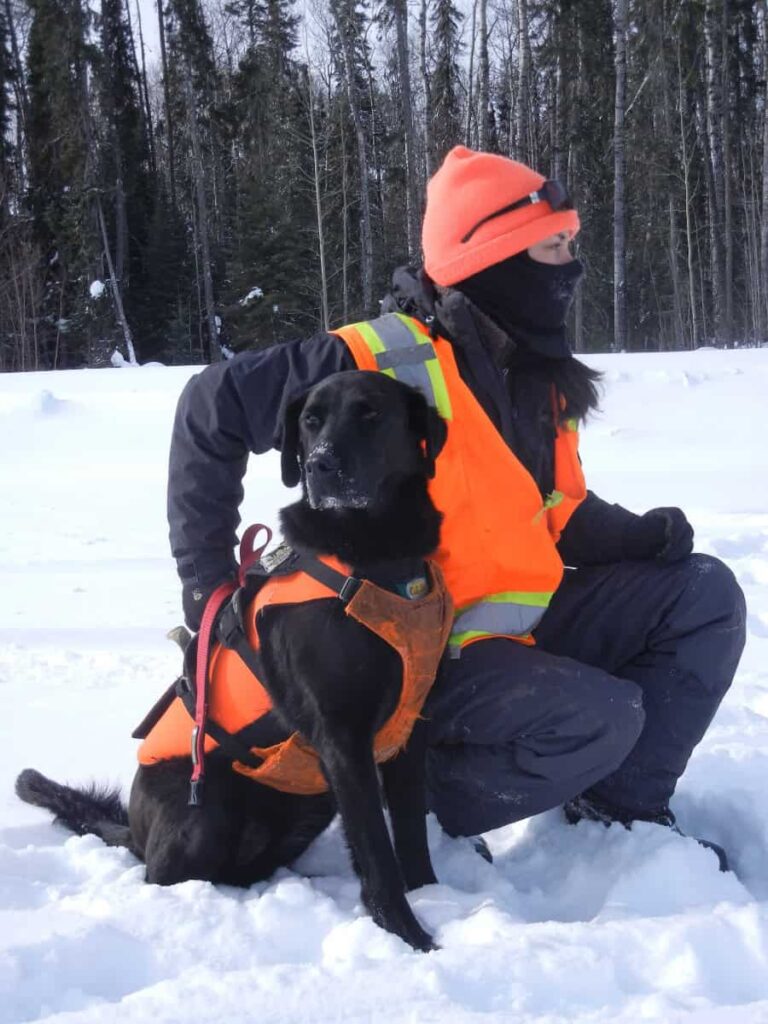
Conservationist Jennifer Hartman shares all about working with dogs on Season Two Episode 7 of Her Side of the Trail. She describes what traits they look for in the dogs they adopt from rescues and what it’s like to train them and their human counterparts.
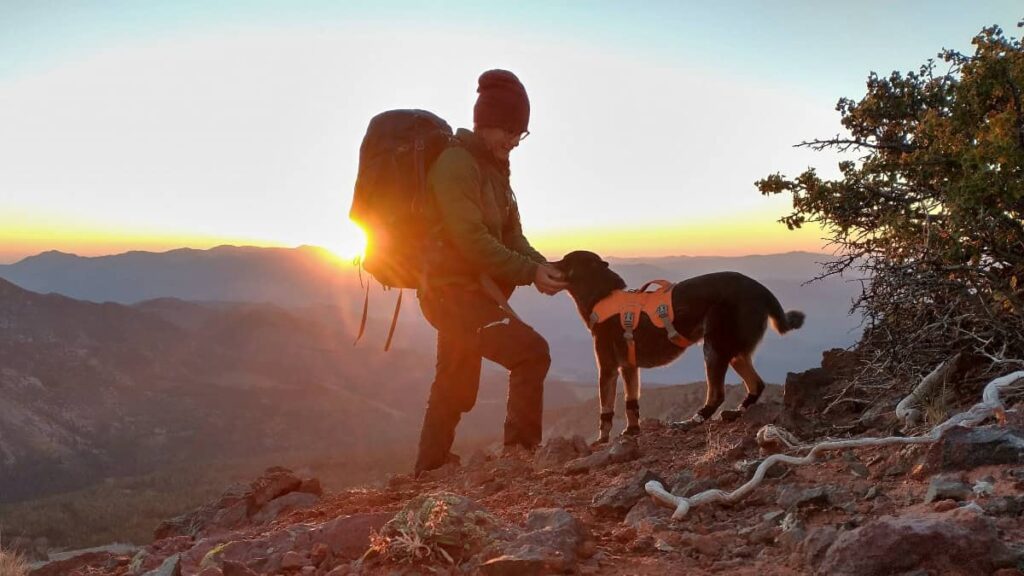
Jennifer and her team from Rogue Detection Teams have traveled all over the globe to gather data for genetic analysis to provide information about endangered and rare animals. It really is the coolest job!!
What We Talk About This Episode
[00:02:32] Childhood: Jennifer shares about her experiences growing up
[00:04:08] Rogue Detection Teams: Jennifer briefly describes what she does for work
[00:05:23] The Path to Detection: Jennifer talks about the steps she took as an undergrad and graduate that led her to working in wildlife biology
[00:08:36] Bounder vs Canine Handler: Jennifer discusses why they choose to use the term “bounder” versus “canine handler”
[00:09:53] Job Expectations: Jennifer shares what traits make a person a good “bounder” with the team
[00:11:56] The Perfect Pup For the Job: Jennifer discloses what traits they look for in the rescue dogs to make a perfect detection dog.
[00:15:38] How Long on the Job: Jennifer talks about how longs the dogs stay on staff with Rogue Detection Teams
[00:17:40] Types of Work: Jennifer describes the types of work they’ve done over the years
[00:19:43] Good Boy, Filson: Jennifer shares a fun story about a time working in Yosemite with one of her dogs
[00:22:53] Traveling the World: Jennifer talks about some of her favorite places she’s traveled and where’d she return to
[00:25:58] Jungle Work: Jennifer describes some of the work she’s done in rainforests and jungles
Jennifer Hartman (00:00)
but some dogs take a little longer. Like my current partner, Echo, was about five months. And we actually adopted him because he loves fetch. And then when we were, ⁓ you know,
Lauren – Her Side Of The Trail (00:06)
Mm-hmm.
Jennifer Hartman (00:11)
going through the motions and teaching him, he’s like, you know what? I don’t really want to play ball. So then we had to, you know, we obviously were in love with him. We’re not going to return him to the shelter. ⁓ And so we just had to think creatively about what he wanted, what he needed. And he’s actually a treat dog. So he gets treats for finding scat in the wild.
Lauren – Her Side Of The Trail (00:22)
Yeah.
There
Lauren – Her Side Of The Trail (00:42)
This is a different kind of episode, but I think you’ll enjoy it as much as I did Jennifer Hartman is the guest this week. She is part of the Rogue Detection Teams, which is a group of handlers and rescued dogs who go across the globe.
And the dogs sniff out information for scientists. So whether it’s for endangered species, rare species, they use these dogs to gather information so they can learn more about the species and how to protect them, or just in general, learn more about them. Maybe we don’t know enough about them.
I’m a little upset that I didn’t know that this was a career option, but that’s okay. I still got to speak to Jennifer Hartman about it and live a little vicariously through her and what she does. And I hope you enjoy this episode and let’s get into it.
Lauren – Her Side Of The Trail (01:30)
hello Jennifer. Thank you so much for joining me today to talk about your incredible dogs. I’m so excited for this episode. I’m a big dog lover and everything that they can do. So I’m so glad you’re here. How is everything going?
Jennifer Hartman (01:46)
⁓ fantastic. I actually have one of my pups right here with me. He’s helping me with the podcast.
Lauren – Her Side Of The Trail (01:50)
Aww. I love that,
I love that. What’s the dog’s name?
Jennifer Hartman (01:56)
His name’s Phil Sin.
Lauren – Her Side Of The Trail (01:58)
Billson, Billson? ⁓ did I hear that right? ⁓ I love that. I love that. How cute. How cute. Well, before we even get into the dogs, though, I just want to know where are you located? I’m sure you have a home base, even though I know you travel a lot.
Jennifer Hartman (01:59)
Yeah, Filson. Like the wool company. ⁓
Yeah, we’re located in Rice, Washington, and no one’s ever heard of it, but it’s two and a half hours north of Spokane, and we’re right on the Canadian and Idaho border in that northeast corner.
Lauren – Her Side Of The Trail (02:20)
No.
Okay.
Now you didn’t grow up in that area though.
Jennifer Hartman (02:32)
No, actually I’m from Colorado originally. Born in Fort Collins and raised in Boulder, but I did live on the East Coast for a little bit. We spent some time in Connecticut. kind of, I feel like I don’t really call any place my home anymore. You know, it’s just kind of a nomad. wherever my pillow ends up, you know.
Lauren – Her Side Of The Trail (02:35)
Okay.
nice!
Yeah, the whole country is your home, that’s fine.
Yeah, seriously.
Now, the work that you do includes a lot of, you know, being outdoors and focused on conservation. when you grew up, was that a big emphasis in your household growing up or your parents being on that?
Jennifer Hartman (03:11)
Surprisingly, no, but not in a, I mean, I think we grew up in a household that we were aware of that and it was important, but it wasn’t like my parents were biologists or anything like that. So it it kind of in the background and I just grew up reading stories about the outdoors and was always really inspired by those stories. And I was like, oh, that adventuring is for other people, not me.
Lauren – Her Side Of The Trail (03:25)
Gotcha.
Jennifer Hartman (03:40)
So I would just live vicariously through these stories. And I think we went camping once when I was a child. And I remember it being really cold and I didn’t like digging the hole, you know. So honestly, I didn’t have a lot of experience before I my way into this field.
Lauren – Her Side Of The Trail (03:50)
Ha ha ha ha ha ha ha
this is a great segue though to talk about your line of work. If you could explain to the audience exactly what you do and how awesome it is.
Jennifer Hartman (04:08)
This part is tough for me because I’m like, how do I make it succinct? ⁓ But I work with rescue dogs. We adopt each of our dogs from shelters and they all love to play fetch. And we utilize their desire to play fetch to help us find data in the wild. And data can be anything from poop, from wildlife.
to other things like invasive species or toxins or viruses. So it’s really diverse and the dogs help us with their sense of smell and lead us to all this information. And we don’t have to see the wildlife, call her the wildlife. So it’s what’s called a non-invasive ⁓ research methodology.
Lauren – Her Side Of The Trail (04:52)
I’m telling you, dogs are just so incredible. They do so many different jobs out there that I’m just, every time I learn about them, I’m just so impressed.
Jennifer Hartman (04:54)
Yes.
Me too.
mean, honestly, I’m shocked by some of the things I hear that dogs are doing. And I mean, I shouldn’t be. I’ve been doing this for two plus decades, but it’s really amazing what they can smell and sniff out for us.
Lauren – Her Side Of The Trail (05:16)
Yeah, they’re
so they’re so great. So how did you get into this line of work then since you didn’t grow up kind of being an outdoorsy person?
Jennifer Hartman (05:23)
I, it’s kind of funny. ⁓ I think my, my sister was a big influence on me. And, ⁓ I remember she did two things that were pretty pivotal. One was when I was in college, she said, you should go study abroad in New Zealand. And I was like, ⁓ okay. I, you know, I always wanted to study abroad, but I was thinking, you know, Europe or Australia. She’s like, New Zealand. And I was like, where’s New Zealand? You know, this was, this was.
Lauren – Her Side Of The Trail (05:48)
No, but New Zealand, yeah.
Jennifer Hartman (05:53)
well before Lord of the Rings movies came out. I was a big movie fan.
Lauren – Her Side Of The Trail (05:54)
Wait, ever see, you
ever see, what is it, last week tonight with John Oliver and he always like jokes about how no one knows where New Zealand is?
Jennifer Hartman (06:05)
No, I
have seen John Oliver, but I haven’t seen that bit that he does.
Lauren – Her Side Of The Trail (06:10)
Yeah,
every once in a he brings up and he’s like, and this map doesn’t even include New Zealand and you didn’t notice.
Jennifer Hartman (06:15)
Yeah, it’s
so true though. mean, growing up, I didn’t know. mean, Australia was like big in my mind, but somehow New Zealand slipped my imagination. And I think that’s what’s really, what was really key because I did end up following her advice and going there. And it was the first time I went backpacking. And they have amazing trails there and it’s very friendly to the outdoor community. ⁓ It’s just.
Lauren – Her Side Of The Trail (06:18)
Mm-hmm.
wow, okay.
Jennifer Hartman (06:44)
obviously epically gorgeous and I kind of caught the bug there. But as I kind of hinted at, I’m a big bookworm and I didn’t think I could get a job in the outdoors. I’m an English literature major by background. And so I did this great study abroad in New Zealand and then I came back and was like, you know, when I graduate, what am I going to do? I don’t really want to be a teacher.
Lauren – Her Side Of The Trail (06:48)
Mm-hmm.
Okay.
Jennifer Hartman (07:11)
And my sister, again, was like, you should try the Student Conservation Association. And it’s this great organization. I don’t know if you’ve heard of it. They actually might be based in the East Coast, but they place young students ⁓ in different internships around the country, from Alaska to Hawaii to all across mainland US. And it’s…
Lauren – Her Side Of The Trail (07:20)
No.
Jennifer Hartman (07:34)
working in national parks, it’s working in national forests, it’s working on research projects, it’s doing wildlife or trail maintenance. It’s really diverse. ⁓ I had never heard of it again, my sister, I don’t know how she knows me better than I know myself. ⁓ But I got, applied to a few and ⁓ I actually got one to research or help study ⁓ Northern Spotted Owls in California.
Lauren – Her Side Of The Trail (07:48)
She’s your guardian angel.
Have fun.
Jennifer Hartman (08:03)
And that’s what did it. That’s that was it. That’s what launched everything. ⁓ And I went out there right after college thinking this is just an internship. It’ll be done in six months and then I’ll have to like join the real world. And here I am 20 years later, I’m still doing work in wildlife.
Lauren – Her Side Of The Trail (08:20)
That’s so crazy.
That’s why I was gonna ask you how long you’ve been doing it. So 20 years, huh?
Jennifer Hartman (08:24)
Yeah, was, I have no, I’ve had no other job except for, I mean, I’ve had little jobs here and there, but it basically launched my career into wildlife biology.
Lauren – Her Side Of The Trail (08:36)
Now, you are, your position is called a bounder, is that correct? Yeah, I looked that up.
Jennifer Hartman (08:42)
yeah, I love that. Yeah. We,
⁓ I think the world would probably know us as canine handlers or in our field, it’s more commonly known as wildlife detection dog handlers. But in our program, rogue detection teams, ⁓ we have come up with a ⁓ more holistic term that we feel describes more what we do in the field.
Lauren – Her Side Of The Trail (08:51)
Okay.
Okay.
Jennifer Hartman (09:10)
⁓ Handler just didn’t, I don’t really handle the dogs, you know, they, they’re so smart. They come to us, ⁓ so motivated. ⁓ they’re our teachers and we really felt, ⁓ that we wanted a more equal, ⁓ title, you know, for like, Handler makes it sound like I know what I’m doing when really the dogs have shown me everything they’ve ever, you know, learned in this field. And, ⁓ so we’re bound to them.
Lauren – Her Side Of The Trail (09:14)
No.
You
Yes.
Jennifer Hartman (09:40)
we’re bound to the environment when we’re bound to the species that we’re surveying for. So ⁓ Bounder just kind of came about organically and fit us more than canine handler.
Lauren – Her Side Of The Trail (09:53)
So what does it take then to be a bounder with rogue dogs?
Jennifer Hartman (09:57)
Ooh,
that’s tough. ⁓ I think everyone… ⁓ It’s funny because I think everyone focuses on the dog, right? For good reason. ⁓ And they think, you must have these like just incredible dogs. And, you know, a lot of people think they must be purebreds and they must take forever to train. ⁓
Lauren – Her Side Of The Trail (10:00)
Just asking for a friend because I’m wondering
Yeah. Yeah.
Jennifer Hartman (10:24)
And really, like I said, mean, we adopt our dogs from shelters, they’re all mutts or mixed breeds. ⁓ And they learn pretty fast because they’re really motivated. And as the person, that’s the hard part. Finding our boundaries is a challenge for us. And it takes someone who has a really diverse but odd ⁓ set of skills.
So we’re looking for people who love to hike, obviously, but we’re not really on trails a lot. So lot of off trail hiking, people have to love field work. They have to be empathetic and compassionate and patient because the dogs that we adopt ⁓ are typically on euthanasial lists for being too much untrainable, unadoptable because of their high drive. So we need people who are really open to
Lauren – Her Side Of The Trail (10:50)
Yeah.
wow.
Jennifer Hartman (11:20)
being led and taught by a dog as opposed to I’m going to structure this dog in this way so that they’re like obedient and they go out and they’re good canine citizen. Because we actually want our dogs to be curious and explore and we have to support that. ⁓ So it’s kind of a really big mind shift for I think how maybe many people think about our relationships with dogs. ⁓
Lauren – Her Side Of The Trail (11:42)
Mm-hmm.
Jennifer Hartman (11:48)
And we camp, we camp a lot. So people have to not mind not showering, not seeing your friends and family for a while, know, living off the grid. ⁓ So it’s kind of finding those people who have all those little unique skill sets is tough for us, but we have a good team.
Lauren – Her Side Of The Trail (11:56)
Gotcha.
you
Now you were talking about the dogs, you know, so I was going to ask you, like, what do you look for in the dog? I know you said that they need to enjoy fetch. It looks like on your website, it seems like you have a lot of like maybe cattle breed dog mixes. is that who you’re looking for or is that just happens to be the ones that you end up rescuing?
Jennifer Hartman (12:17)
Yeah.
That’s a good question. ⁓ It’s a little both. We aren’t breed specific. ⁓ So we’ve had any number of breeds come through our program in the past 20 years. ⁓ For whatever reason, we end up with a lot of cattle dogs because ⁓ they’re adorable as puppies. People get them and they’re like, wow.
Lauren – Her Side Of The Trail (12:34)
Okay.
Yeah,
Jennifer Hartman (12:57)
this dog’s too much.
Lauren – Her Side Of The Trail (12:57)
and they’re a lot.
Jennifer Hartman (12:58)
Yeah. And ⁓ actually my partner and the fellow ⁓ co-founder of the program, his first dog was a cattle dog. And I think ⁓ people would see pictures of him with Gator and would be like, you know, ⁓ wow, like they like cattle dogs. So then we started getting a lot of inquiries from cattle dog rescues about like, hey, we’ve got a cattle dog for you.
Lauren – Her Side Of The Trail (13:25)
you
Jennifer Hartman (13:25)
And before
you knew it, it kind of snowballed and actually Filston is a cattle dog too and my other partner is a cattle dog and my first working dog was a cattle dog. So ⁓ it’s just kind of happened, but we’re not, you know, we’ve had labs, border collies, ⁓ you know, some breeds that we don’t even know the name of. They’re so mixed. Yeah.
Lauren – Her Side Of The Trail (13:42)
Okay.
A true mutt, right?
Now, how long does it take to train the dogs then to do this work?
Jennifer Hartman (13:56)
⁓ it’s not too long. ⁓ every dog’s different. So some dogs might be ready to be put in the field pretty immediately because they’re, just so driven. Like this, this spring, this past spring, we adopted three dogs and one of them Merlin was pretty much ready to go almost as soon as we got him. Like he’s so smart. He’s a border collie mix. He just was like, okay, I get it people. I know what you want me to find now. Let’s go do it.
Lauren – Her Side Of The Trail (14:09)
Okay.
wow.
You
Jennifer Hartman (14:26)
And
like I said, it’s more teaching than people that takes us a while. It takes about two years for us to get a bounder at a level where, you know, they really can understand dog communication and field work and, ⁓ you know, data collection.
Lauren – Her Side Of The Trail (14:29)
Yeah, yeah.
Jennifer Hartman (14:43)
So, but some dogs take a little longer. Like my current partner, Echo, was about five months. And we actually adopted him because he loves fetch. And then when we were, ⁓ you know,
Lauren – Her Side Of The Trail (14:50)
Mm-hmm.
Jennifer Hartman (14:55)
going through the motions and teaching him, he’s like, you know what? I don’t really want to play ball. So then we had to, you know, we obviously were in love with him. We’re not going to return him to the shelter. ⁓ And so we just had to think creatively about what he wanted, what he needed. And he’s actually a treat dog. So he gets treats for finding scat in the wild. My first treat dog, yeah.
Lauren – Her Side Of The Trail (15:06)
Yeah.
There you go.
I
am also motivated by treats, so I understand.
Jennifer Hartman (15:24)
Yes,
aren’t we all? He’s kind of my treat is what I say. So I think also it’s, it might not even be treats. might, and this is sound really cheesy, but a lot of it might just be love. You know, that just that energy we’re pushing out to each other in the field, ⁓ I think is what makes us a great team.
Lauren – Her Side Of The Trail (15:38)
Yeah, no.
Now, how long do the dogs stay on staff for then?
Jennifer Hartman (15:51)
When we adopt, we adopt for life. We typically adopt around one year plus because then we’re not just looking at puppyhood playfulness. We’re looking at, this dog needs a job. And then again, every dog’s different. When we first started, we were told, you know, the dogs needed to retire around seven or eight. ⁓ That’s when most dogs are kind of, that’s like geriatric.
Lauren – Her Side Of The Trail (16:02)
Mm-hmm. Like this is their actual personality, yeah.
Mm-hmm.
Jennifer Hartman (16:20)
But we would get to that age and our dogs, because they’re so fit and so athletic, that’s their peak. They are hitting their stride at seven or eight. They just know what they’re doing. They’re out there. They’re experts. So we kind of started pushing that with our vets, obviously, in full agreement. Like, yeah, these dogs need to be out there. ⁓ And so we’ve actually had dogs who are still doing soft, gentle projects like butterflies and…
Lauren – Her Side Of The Trail (16:26)
Mm-hmm.
yeah.
Jennifer Hartman (16:50)
other, you know, more gentle field work up until they’re about 13 or 14. Yeah. And then they retire with their main bounder. ⁓ And yeah, I mean, we’ve had dogs live till 18 years old, so pretty long.
Lauren – Her Side Of The Trail (16:56)
wow, that’s awesome, I love that. Aww. Yeah.
That’s incredible. And they
get a really, really good life.
Jennifer Hartman (17:12)
Yeah, we
hope so. We really try. We do our best.
Lauren – Her Side Of The Trail (17:17)
I would
think that’s dream job in the dog world. Like I get to go out and sniff stuff.
Jennifer Hartman (17:20)
I know, and
sniff poop specifically. We get a lot of jokes about like, my dog likes to sniff poop. And we’re like, well, but ours
Lauren – Her Side Of The Trail (17:30)
different.
Jennifer Hartman (17:32)
yeah, they’re not gonna roll in it. They’re not doing it to eat it. they just want to get their ball. ⁓ But it is a pretty small job.
Lauren – Her Side Of The Trail (17:40)
Now, what kind of missions, I know we were talking about sniffing poop, but also with butterflies. So what kind of missions do you do? Like, what are you looking for? I know that’s probably hard to kind of summarize, but, and where do they take you? All over the world?
Jennifer Hartman (17:57)
Yeah, oh my gosh, they’ve taken me. I’ve been to Africa for this work, Nepal, Vietnam. We just got back from Bhutan but a lot of obviously around the United States and Canada and Mexico. One of the projects I work on for the past six years, seven years is an endangered species called the Sierra Nevada red fox.
Lauren – Her Side Of The Trail (18:24)
Mm-hmm.
Jennifer Hartman (18:25)
And there’s
only about between estimates say between 20 to 40 left. And so they’re one of the most rare mammals, but no one really talks about them. ⁓ I think people think, ⁓ foxes are pests and why do we care about foxes? But this is a high elevation specialist and there’s very few left. ⁓ And then we’ve done everything from bumblebee nests to one of our
Lauren – Her Side Of The Trail (18:31)
wow.
no. Yeah.
Jennifer Hartman (18:54)
projects this year was invasive crabs, so we’re working in tidal flats. We’ve done ⁓ whale research, so looking for floating whale scad on the water, and a lot of carnivore research, like wolves, ⁓ grizzly bears, bobcat, coyote, ⁓ but we’ve also done ungulate, like moose and caribou. We work in all four seasons. ⁓
And yeah, it’s incredibly diverse. we’re, you know, we’re one of many programs around the world. So this is a growing ⁓ methodology being utilized by researchers everywhere.
Lauren – Her Side Of The Trail (19:29)
Mm-hmm.
So do you have any fun,
stories you want to share like anything good like fun stories about Echo or Filson that you know any interesting trips to report on.
Jennifer Hartman (19:43)
Gosh, I
have so many stories, but when someone asks you like, I don’t know which one to tell. I’ll talk about Filson. He’s retiring this year, but I’m pretty proud of him, especially he’s gonna be, he’s actually in two books this year, just quickly enough. Yeah, and both,
Lauren – Her Side Of The Trail (20:03)
That’s exciting!
Jennifer Hartman (20:07)
for his work, well, on the Sierra Nevada Red Fox, but specifically in Yosemite National Park. And my first project with him actually, and I wasn’t planning on it, I was supposed to go do this research with my dog Scooby, and I found out, this was back in 2018, that he had cancer. And it was really, really hard for me. And it’s one of the things we don’t really talk about in this field is,
you know, when your dog gets sick, but we’re on a project, you know, do we not go on the project, but we’re under, like all these things. And so it was really just a crazy time for me. And ⁓ I had to transition to working with Filson, who I hadn’t worked with before. I loved him. He was in our program, but ⁓ he wasn’t my main dog. And ⁓ this was a big project. Like we were going to be backpacking through Yosemite. ⁓
Lauren – Her Side Of The Trail (20:45)
Yeah.
Jennifer Hartman (21:05)
⁓ there, you know, it’s mostly roadless. And so had he ever been in a tent? I don’t know. and so I was struggling with all of these things. ⁓ you know, Scooby being sick and working with a new dog and we’re like hiking into Yosemite for the first time. And I remember being in the back country with him and just sharing all those firsts with him, you know, it was, it just, ⁓ it was almost like healing.
to me, you know, being out there with him. And he’s just this shy, sweet, affectionate boy. He has a broken tail and, you know, not very many. I think he must have chewed on chain link fence before we adopted him. has very, you know, few teeth. And, ⁓ you know, he’s not a dog that I think, I mean, everyone in our program loves him, but, you know, he was free on on Craigslist, like no one.
Lauren – Her Side Of The Trail (22:00)
⁓
Jennifer Hartman (22:00)
wanted
him. And this is a dog that ⁓ took me under his wing and guided me when I was thinking, like, here I have to take this dog, I don’t know, and into the backcountry of Yosemite. How are we going to do this? And he really supported me. ⁓ And that’s kind of the story of a of our dogs in our program. But Filson’s been my main ⁓ co-woofer for the past seven years. He’s been by my side through a lot.
Lauren – Her Side Of The Trail (22:30)
⁓ and dogs, dogs are just so intuitive, too. Like, I feel like, you know, they just know what you need. ⁓ So how lucky for you two to both partner together? Yeah, you’re both I think you both probably were what each other needed at the time. Right. So. Yeah.
Jennifer Hartman (22:39)
Yeah.
Yeah.
I like to think so.
He ⁓ really got me through some tough times.
Lauren – Her Side Of The Trail (22:53)
Yeah, dogs. man, I just love dogs so much. ⁓ Just switching gears just slightly because you have traveled the world and you are on a lot of trails and places like that. Are there any places that you’ve gone for work that you would love to return to, like in a more relaxing way to maybe do some hiking or exploring around there?
Jennifer Hartman (22:56)
I’m
I think that’s what’s so cool about this work is for the most part we go places that most people aren’t going. So they’re not on like your, you know, top hike list, you know? And I do get to see some really neat and different ecosystems. ⁓ But funnily enough, one of the places that has just stolen my heart ⁓ is a very popular
Lauren – Her Side Of The Trail (23:26)
Mm-hmm.
Mm-hmm. Mm-hmm.
Jennifer Hartman (23:48)
place to go hiking. It’s for that Red Fox work actually that I was sharing about. It’s in the Eastern Sierras. ⁓ And I could just get lost in the Eastern Sierras. You go over your first saddle and you see just all of the mountains spread out in front of you and you think like this is endless. It just goes on forever and it’s beautiful and it’s jagged and it’s snow capped and it’s rugged and ⁓
It just really makes my imagination just go wild with all the places that you could explore back there. So that is a definite place that I would love to go back and not work, even though I feel pretty darn lucky that I get to go there for work. ⁓ But like you kind of hinted at, there’s pressure when you’re out there for work.
Lauren – Her Side Of The Trail (24:39)
you
Yeah.
Jennifer Hartman (24:46)
not out there sightseeing, I’m out there on a job. ⁓ so being able to go back and just maybe spend a week at a lake would be incredible.
Lauren – Her Side Of The Trail (24:58)
Like anyone who travels for work, mean, even if they, you know, they’re going to like a major city and they go out for dinner one night, like, but they don’t really get to enjoy the environment, the area, wherever they’re traveling. So that’s why was wondering with you too, because, you know, you’re working. Yeah. Like you said, you’re working. It’s hard to relax and really take it all in.
Jennifer Hartman (25:14)
And I mean, yeah, I
think as I think a place I should have mentioned is Bhutan. I mean, like you said, going there for work is one thing and we I think we had like one or two days off and that was just it wasn’t really, you know, days off. can’t just hop in a car and go hiking. But that’s a place like the Himalayas would definitely be a place that I would just love to hike and again, get lost in for a while.
Lauren – Her Side Of The Trail (25:28)
Mm-hmm.
No.
so nice.
have you done any, like rainforest work with the, with the dogs? Have you been in that kind of environment with them? Yeah. Yeah. Any.
Jennifer Hartman (25:51)
Yeah, like jungle, you mean? Yeah.
⁓ Usually when we’re doing subtropical work, we try to go in the dry season. But I have worked ⁓ in Cambodia to do tiger work. And Nepal was kind of that way, and Vietnam. And we’re talking leeches and howler monkeys and skittas. it’s just, yeah, the snake.
Lauren – Her Side Of The Trail (26:02)
Okay.
That’s so cool. Ugh. Snakes.
Jennifer Hartman (26:21)
⁓ It’s got it all. ⁓
Lauren – Her Side Of The Trail (26:24)
That’s so cool, though. Like, I keep like picturing like you’re like on mountains and things like that and like forest, but I was like, wait, do they also do like jungle work? Like, that’s really cool. That’s really cool.
Jennifer Hartman (26:31)
Yeah. Yeah, it doesn’t, we
don’t talk about it as much. Those are fewer and farther in between projects, you really rare. ⁓ And hopefully as the methodology grows, we’ll start seeing dogs helping in these ecosystems more. ⁓ But they’re hard. Like subtropical work is incredibly challenging. I mean, our samples degrade almost overnight. And honestly, there’s a lot of poaching.
Lauren – Her Side Of The Trail (26:40)
Mm-hmm.
I’m sure.
wow.
Jennifer Hartman (27:00)
So there’s the challenges with managing both mentally and emotionally the fact that you’re out there to do this work, but ⁓ it’s disappearing literally in real time in front of you. there’s a lot in the tropical work that’s tough. I mean, it happens everywhere, but it’s more in your face, I think, ⁓ when we travel to some of these countries.
Lauren – Her Side Of The Trail (27:01)
Mm-hmm.
Yeah.
Wow, my goodness. I’m just like so fascinated by your work and what you do and what the dogs do. And I just think it’s just so interesting. So thank you so much for just sharing, you know, this little bit about it. I appreciate it. Yeah.
Jennifer Hartman (27:41)
thank you so much.
Lauren – Her Side Of The Trail (27:44)
So if people wanted to kind of learn more about what you do and your company and follow along with your adventures with your dogs, are there places that they can do that? Are you on social media?
Jennifer Hartman (27:56)
We are, we firmly believe in science communication. We don’t do as good a job as we wish, because we’re always in the field, but we’re on most of the platforms, like Instagram, Facebook. We do have a YouTube channel. We’re not on TikTok. But yeah, or we’re on threads and blue sky, if that’s more your style.
Lauren – Her Side Of The Trail (28:03)
Yeah, it’s hard to keep up with you.
Now is it all like rogue dogs or what or?
Jennifer Hartman (28:26)
Yeah, there’s a combination between rogue detection teams or rogue dogs, but either any of those search ⁓ will bring us up.
Lauren – Her Side Of The Trail (28:30)
Okay. Okay.
And then what’s your website again?
Jennifer Hartman (28:38)
roguedogs.org. ⁓
Lauren – Her Side Of The Trail (28:41)
Rogue dogs that work got it. All right. So before I let you go, I always ask all my guests about just like my final question ⁓ just about hiking and if you could only do a specific kind of trail for the rest of your life. Now you’ve been everywhere. So this is like, you know, like what Lauren, why you only give me these two options. But my two options are would you only hike to scenic views or would you only hike?
Jennifer Hartman (29:03)
You
Lauren – Her Side Of The Trail (29:10)
to waterfalls.
Jennifer Hartman (29:18)
Maybe waterfalls funnily enough. I just think they’re in these hidden pockets and you have to work really hard to get to them. Not that you don’t for the views too, but it’s special. know, when you round a corner and then there’s just this water flowing out of it’s gorgeous. Yeah.
Lauren – Her Side Of The Trail (29:30)
But it’s different, I understand. Yeah.
Yeah, I totally get that. totally get that. Well,
Jennifer, thank you so much for spending your time. I know you’re busy and you’re recovering from your travel, so I do really appreciate it. And thank Filson for standing by as, you know, as moderator. Give him a scratch behind the ear for me. ⁓
Jennifer Hartman (29:46)
No.
Yeah, wish he was, he’s over there napping otherwise. I definitely will.
Lauren – Her Side Of The Trail (30:01)
But again, thank you so much and thank you for the work that you and your team are doing. I know it’s extremely important. We need to, you know, be aware of what’s going on with this planet. So thank you again for all of your work and and thanks for being here.
Jennifer Hartman (30:16)
Wow, thank you. This is so, such a treat.